
Connecting Shopify with ERP: JTL, Xentral & SAP (2026)
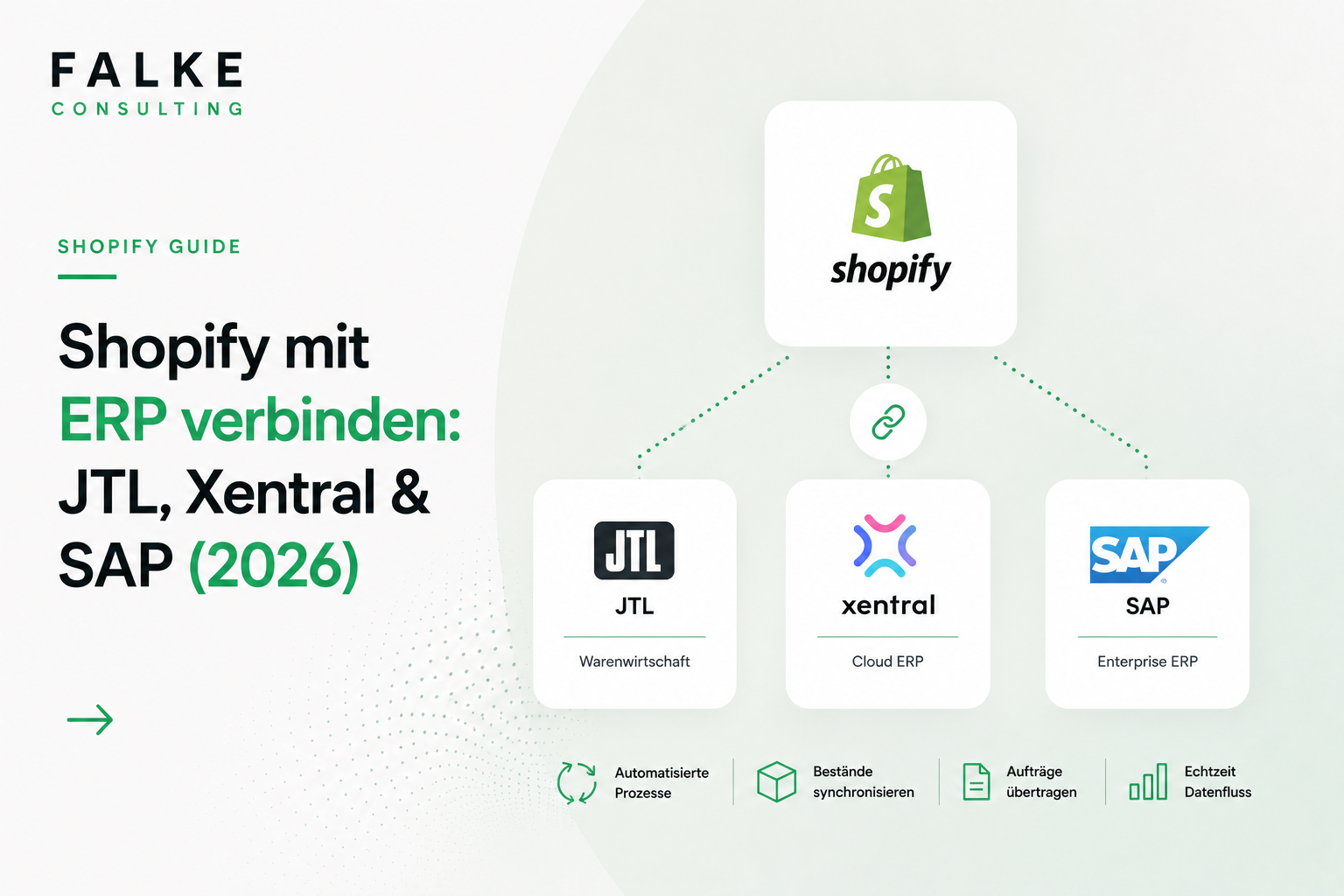
Connecting Shopify with ERP/Merchandise Management: JTL-WaWi, Xentral, and SAP – Interfaces, Data Flows, Pitfalls, and When the Connection Pays Off.

TL;DR
- An ERP/merchandise management system integration automatically synchronizes inventory, orders, and documents – one inventory level instead of two.
- Strong in DACH SMEs: JTL-WaWi and Xentral; in the enterprise environment, SAP via middleware.
- The effort lies in clean process mapping, not in the pure connection.
- Most common mistakes: incorrect SKU mapping and infrequent synchronization → overselling.
As order volume, inventory, and shipping grow, manual maintenance reaches its limits. An ERP or merchandise management system integration connects Shopify with your back office – inventory, orders, and documents flow automatically. This article shows how the integration with JTL-WaWi, Xentral, and SAP works and what you need to consider.
01What an ERP Integration Does
A clean interface synchronizes in both directions: products and inventory from the ERP to the shop, orders and customers from the shop to the ERP, plus shipping status and tracking back to the shop. The result: one inventory level instead of two, no overselling, no double entry. The document side (DATEV, lexoffice) is covered in the article on Accounting & DATEV.
02JTL-WaWi
JTL-WaWi is widely used in German SMEs and can be connected to Shopify via a connector. Strengths: inventory, shipping, and accounting from a single source. Pay attention to the correct assignment of variants and the synchronization intervals to ensure real-time inventory accuracy.
03Xentral
Xentral is popular with growing D2C brands and strong in automating order processing, purchasing, and fulfillment. The Shopify integration is established; the effort lies primarily in clean mapping of your processes, not in the pure connection.
04SAP & Enterprise
In the enterprise environment, Shopify (mostly Plus) meets SAP. Here, the integration runs via middleware or individual integrations. This is a project with clear specifications – data models, interfaces, and responsibilities must be defined in advance.
We connect your Shopify shop cleanly with JTL, Xentral, or SAP – including process mapping. Schedule an appointment →
05Pitfalls to Avoid
- Variants/SKUs not cleanly mapped → incorrect inventory.
- Infrequent synchronization → overselling for fast-moving items.
- Tax and pricing logic in ERP differs from Shopify.
- No clear responsibility for which system holds the "truth".
Frequently Asked Questions
Which ERP is suitable for Shopify?
Does synchronization run in real-time?
Do I need Shopify Plus for an ERP integration?
What does an ERP integration cost?

Seit Jahren setze ich Shopify-Shops für Marken im DACH-Raum um — von der Migration über den Relaunch bis zur Conversion-Optimierung. In diesem Blog teile ich, was in echten Projekten funktioniert.

Mehr aus deinem Shopify-Shop holen?
Lass uns in einem kostenlosen Erstgespräch herausfinden, wo bei dir der größte Hebel liegt — technisch, inhaltlich oder bei der Conversion.
Kostenloses Erstgespräch buchen