
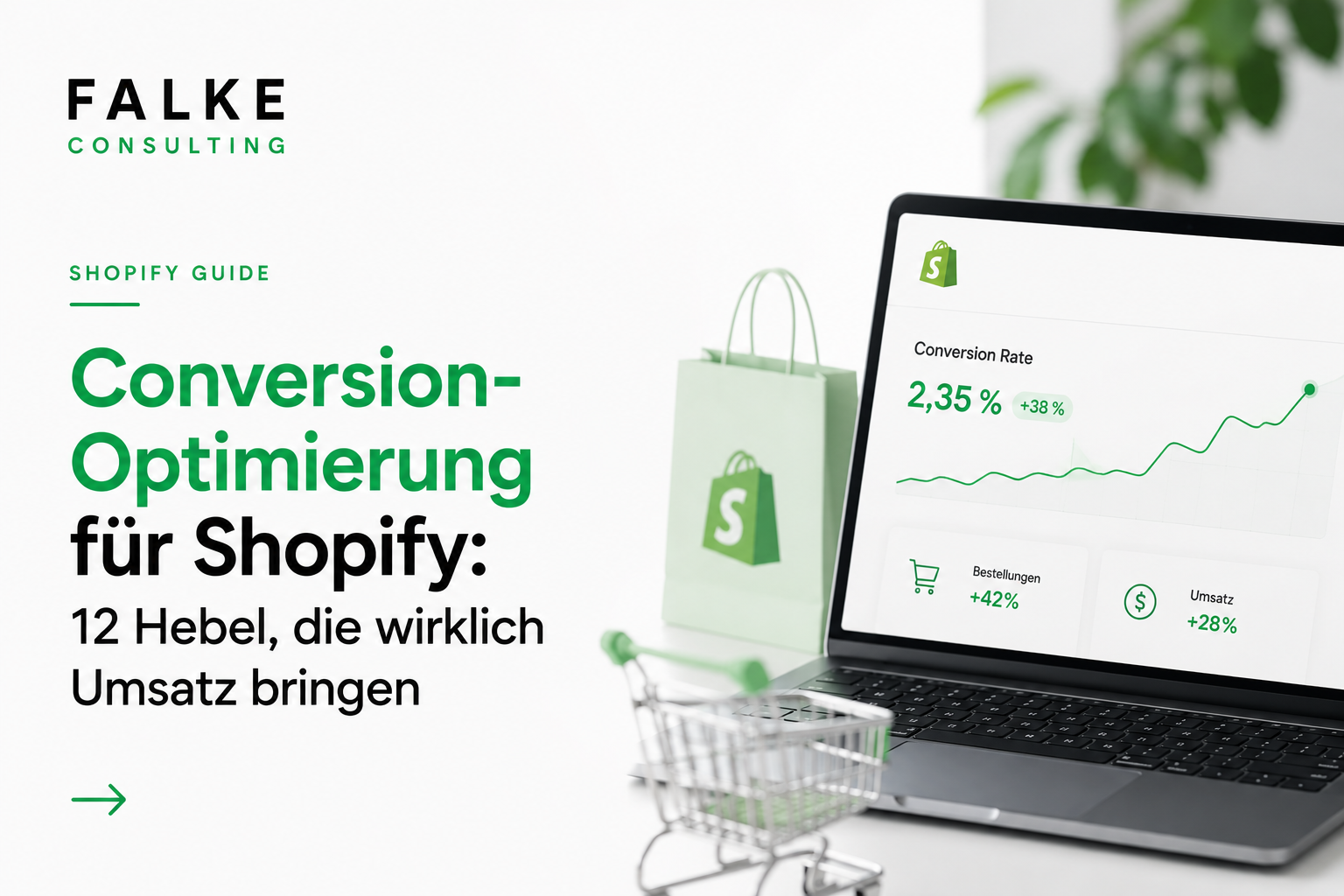
Conversion Optimization for Shopify: 12 Levers That Truly Drive Sales
Twelve concrete CRO levers for your Shopify store – from loading time to trust to checkout. With practical figures from the DACH region.

TL;DR
- Getting more from existing traffic is more cost-effective than acquiring new traffic.
- The biggest levers are loading time, mobile UX, payment methods, and checkout.
- Every change is measured and tested individually – CRO is a process, not a one-off project.
- Pressure tactics harm the brand; reputable CRO works with clarity and trust.
More traffic is expensive – getting more from existing traffic is the more cost-effective lever. Here are twelve proven conversion levers for your Shopify store in the DACH region. They cover the entire funnel; for specific tips on optimizing your product page, check out our article on optimizing product pages.
01The 12 Conversion Levers at a Glance
- Loading Time & Core Web Vitals: Every additional second increases the bounce rate. Speed is the invisible conversion killer. Find out more in the article on Core Web Vitals & Speed.
- Mobile-First UX: The majority of purchases are made on smartphones. Large tap targets, readable fonts, short paths.
- Trust Signals: Reviews, seals of approval, a complete imprint, and transparent shipping information reduce purchase anxiety.
- Clear Product Pages: Benefits instead of feature lists, good images, trust on the button – the detailed guide is in the article on optimizing product pages.
- Expected Payment Methods: Invoice payment, PayPal, Klarna, and TWINT in Switzerland. If the desired method is missing, the purchase will be abandoned. The article on Payment Providers shows which providers are suitable for the DACH region.
- Guest Checkout: No forced registration – mandatory sign-up is one of the biggest reasons for abandonment.
- Show Shipping Costs & Delivery Time Early: No unpleasant surprises in the last step; this prevents shopping cart abandonment.
- Lean Checkout Forms: Only ask for what is necessary. Every superfluous field costs conversions.
- Well-Thought-Out Search & Navigation: Those who find what they're looking for quickly are more likely to buy. Useful filters and a good shop search pay off directly.
- Smooth Shopping Cart: Cart drawer with a clear quantity/price overview and visible next step.
- Returns & Warranty Visible: Clear return and warranty information removes the last uncertainty before purchase.
- Tracking & A/B Tests: Without clean, GDPR-compliant tracking, optimization is guesswork. Test individually, then scale.
We'll find out where your shop is losing conversions together. Book an appointment →
02Measure, Test, Learn
Don't implement all levers simultaneously. Set up clean tracking, observe where users are dropping off, and test changes individually (A/B). Many small, validated improvements almost always beat a big relaunch based on suspicion. For legally compliant measurement, the article on Server-Side Tracking can help.
03What Conversion Optimization is NOT
Aggressive discount pop-ups, artificial countdown timers, and manipulative overlays may boost a metric in the short term – but they damage trust and brand. Reputable CRO works with clarity, speed, and genuine arguments, not with pressure.
Frequently Asked Questions
What is a good conversion rate?
Where should I start with optimization?
Do I need a lot of apps for this?
How long does it take for CRO to take effect?
Is CRO worthwhile even with little traffic?

Seit Jahren setze ich Shopify-Shops für Marken im DACH-Raum um — von der Migration über den Relaunch bis zur Conversion-Optimierung. In diesem Blog teile ich, was in echten Projekten funktioniert.

Mehr aus deinem Shopify-Shop holen?
Lass uns in einem kostenlosen Erstgespräch herausfinden, wo bei dir der größte Hebel liegt — technisch, inhaltlich oder bei der Conversion.
Kostenloses Erstgespräch buchen